Use 15° for tall, narrow targets like columns, flags and palms; 30–36° for most trees, statues and facade accents; 45–60° to wash a wall or a wide canopy; and 100° for hedges and low, wide plantings. The farther the light travels, the wider the beam gets.
What beam angle means
The beam angle is how wide the cone of light leaving a spotlight is. A narrow beam concentrates light into a tight, bright column that reaches far. A wide beam spreads the same light over a bigger area, so it looks softer and does not reach as high.
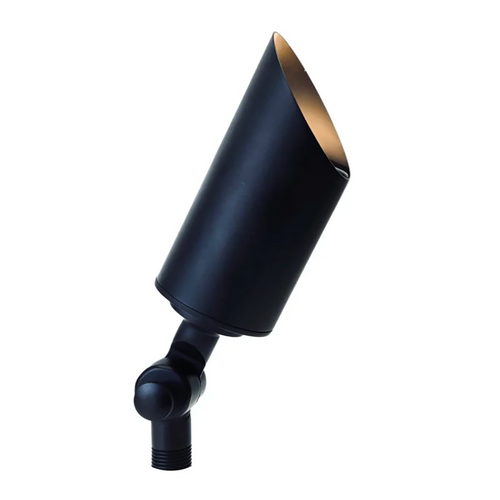
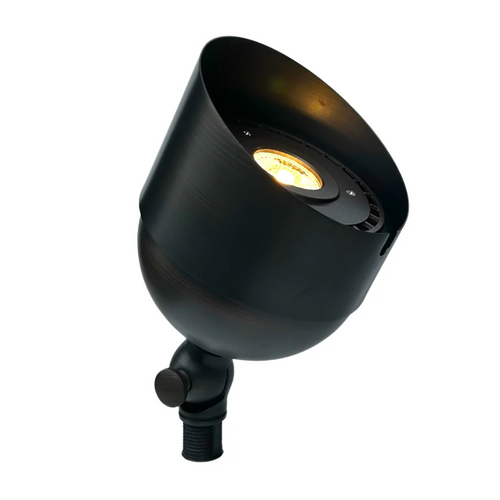
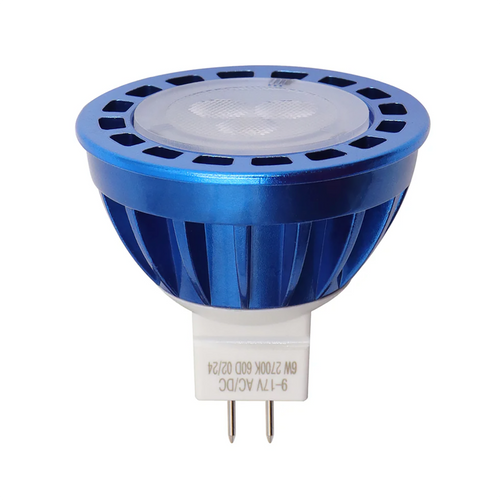
On most landscape spotlights, the beam angle comes from the bulb, not the fixture. Swap an MR16 bulb for a different beam and the same fixture lights something completely different.
Chapter 02How wide the light gets
Beam width grows with distance. This chart shows roughly how wide the light is at 10 ft and 20 ft from the fixture.
| Beam angle | Width at 10 ft | Width at 20 ft | Feels like |
|---|---|---|---|
| 15° | About 2.6 ft | About 5.3 ft | A narrow column of light |
| 30° | About 5.4 ft | About 10.7 ft | A defined spot |
| 45° | About 8.3 ft | About 16.6 ft | A soft flood |
| 60° | About 11.5 ft | About 23 ft | A wide wash |
The formula, if you want to work it out: width ≈ 2 × distance × tan(beam angle ÷ 2).
Chapter 03Which angle for what
| Target | Beam | Placement |
|---|---|---|
| Columns, pillars, flagpoles | 15° | Close to the base, aimed straight up |
| Palms and slim trees | 15–30° | 12–24 in from the trunk |
| Statues, fountains, a front door | 30–36° | 3–6 ft in front, aimed slightly up |
| Facade between windows | 30–45° | 12–24 in from the wall, one per wall section |
| Textured walls (stone, brick) | Narrow to medium, close to the wall | 6–12 in from the wall for grazing |
| Smooth walls, wide canopies | 45–60° | 3–6 ft back to wash evenly |
| Hedges, low wide plantings | 60–100° | In front, aimed low |
For trees in detail, see how to uplight trees and palms.
Chapter 04Grazing vs washing a wall
Grazing puts the light very close to the surface with a narrow-to-medium beam aimed almost straight up. Every bump and joint casts a shadow, which makes stone, brick and textured stucco look dramatic.
Washing moves the light back and uses a wider beam to cover the wall evenly. It flattens texture, which suits smooth siding, painted walls and modern facades.
On a facade, place lights between windows, not under them. Light shining into a window glares into the room and shows every reflection from the street.
Beam angle and brightness
Narrowing the beam makes the light look brighter at the target, because the same lumens land on a smaller area. That is why a 5W bulb with a 15° beam can reach the top of a palm, while the same 5W with a 60° beam only lights the lower canopy. If a wide beam looks too dim, try a higher-watt bulb before adding fixtures.
Questions we hear most
What beam angle is best for landscape lighting?
30–36° is the most versatile. Use 15° for tall, narrow targets and 45–60° for walls and wide canopies.
What is the difference between a spot and a flood beam?
A spot beam is narrow, usually 10–30°, and reaches far. A flood beam is wide, usually 40° or more, and covers a bigger area at shorter range.
What beam angle should I use to light a house facade?
30–45° placed 12–24 in from the wall between windows. Use a narrower beam closer to the wall to graze stone or brick.
Can I change the beam angle of my spotlight?
On most MR16 spotlights, yes: swap the bulb for one with a different beam angle. Integrated LED fixtures have a fixed beam.
How far does a 15° beam reach?
A narrow 15° beam keeps its light concentrated, so it reaches the top of tall palms and columns. At 20 ft it is only about 5 ft wide.